Phase 6 – Lifecycle Management
Purpose of the phase
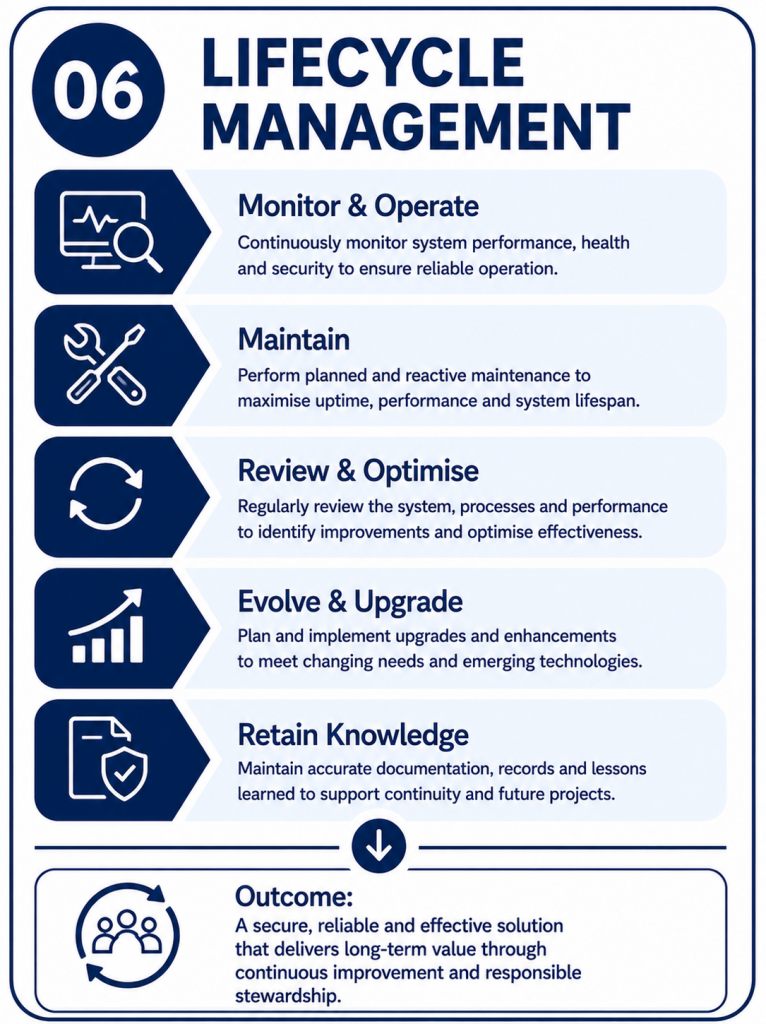
The Lifecycle Management phase ensures that the security solution continues to satisfy the organisation’s operational requirements throughout its service life. Rather than treating system acceptance as the end of the project, this phase recognises that risks, business objectives, technology and operating environments continue to evolve.
Its purpose is to maintain system performance, manage change, identify opportunities for improvement and ensure that the solution continues to deliver the required operational outcomes over many years.
Lifecycle Management extends beyond routine maintenance. It provides a structured approach to monitoring performance, reviewing effectiveness, planning technology refresh, managing modifications and maintaining accurate documentation throughout the operational life of the system.
By the end of the phase, the organisation should be able to explain:
- whether the security solution continues to satisfy operational requirements;
- whether maintenance and support arrangements remain effective;
- whether changes to the organisation, threats or technology require modifications;
- whether future upgrades and technology refresh have been planned appropriately;
- whether the solution continues to provide value throughout its operational lifecycle.
The Lifecycle Management phase ensures that security systems remain effective, resilient and aligned with organisational needs long after the original project has been completed.
What should the Lifecycle Management phase address?
Preventive Maintenance
Preventive Maintenance should ensure that the security solution continues to operate reliably, safely and in accordance with its intended design. Maintenance should be planned, documented and proportionate to the operational importance of the system.
Preventive Maintenance should include, where applicable:
- planned inspections and servicing;
- functional testing of equipment and interfaces;
- firmware and software maintenance;
- replacement of consumable and ageing components;
- verification of system performance following maintenance activities;
- maintenance records and asset history.
Preventive Maintenance reduces the likelihood of unexpected failures and helps maximise the operational life of the security solution.
Performance Reviews
Performance Reviews should assess whether the security solution continues to achieve the operational outcomes defined during the earlier phases of the Security Design Process.
Reviews should consider both technical performance and operational effectiveness, recognising that organisational priorities, threats and operating environments may change over time.
Performance Reviews should examine:
- achievement of operational objectives;
- system reliability and availability;
- incident trends and recurring failures;
- user feedback and operational experience;
- performance against agreed service levels;
- opportunities for improvement.
Regular reviews ensure the organisation continues to receive value from its investment and can identify issues before they become significant operational risks.
Technology Refresh
Technology Refresh should ensure that the security solution remains technically supportable, cyber secure and capable of meeting future operational requirements.
Rather than replacing systems only after failure, organisations should plan refresh programmes based upon lifecycle, supportability, operational need and emerging technology.
Technology Refresh should consider:
- end-of-life and end-of-support products;
- cyber security updates and resilience;
- capacity and scalability requirements;
- changing operational requirements;
- new technologies and capabilities;
- whole-life cost and business value.
A planned refresh strategy reduces operational risk and avoids large-scale replacement programmes driven solely by equipment failure.
Change Management
Change Management should ensure that modifications to the security solution are planned, assessed, approved and documented before implementation.
Even relatively small changes can affect system performance, resilience, cyber security or operational procedures. Changes should therefore be evaluated against the original operational requirements and documented appropriately.
Change Management should include:
- assessment of proposed changes;
- impact on operational performance and risk;
- technical review and approval;
- testing and validation following implementation;
- updates to drawings, schedules and documentation;
- change records and audit history.
Effective Change Management maintains system integrity throughout its operational life and reduces the risk of unintended consequences.
Continuous Improvement
Continuous Improvement should use operational experience, incident data and organisational feedback to improve the effectiveness of the security solution over time.
Improvement should not be driven solely by equipment replacement. Many improvements can be achieved through revised procedures, configuration changes, additional training or better use of existing capabilities.
Continuous Improvement should consider:
- lessons learned from incidents and exercises;
- user feedback and operational observations;
- new threats and emerging risks;
- advances in technology and best practice;
- changes to legislation, standards or organisational policy;
- opportunities to improve operational performance and efficiency.
Lifecycle Management should ensure that security systems continue to evolve alongside the organisation they protect, maintaining operational effectiveness throughout their service life.
Evidence of Effective Lifecycle Management
The exact documentation will vary according to the size, complexity and criticality of the security solution, but organisations should maintain evidence demonstrating that the system continues to be managed, maintained and improved throughout its operational life.
- planned preventive maintenance records;
- system performance and health reports;
- maintenance, service and fault history;
- technology refresh and lifecycle plans;
- approved change requests and change records;
- firmware, software and cyber security update records;
- asset registers and configuration records;
- updated drawings, schedules and technical documentation;
- periodic risk and performance reviews;
- continuous improvement actions and lessons learned.
Lifecycle Management should provide a complete and auditable record demonstrating that the security solution continues to satisfy operational requirements and remains effective throughout its service life.
Alignment with the RIBA Plan of Work & Security Overlay
The Lifecycle Management phase aligns with RIBA Stage 7 – Use, where completed buildings and their supporting systems are operated, maintained and continually improved throughout their operational life.
Within a security project, this typically includes:
- planned maintenance and servicing;
- monitoring operational performance and resilience;
- reviewing emerging threats and changing operational requirements;
- managing modifications through controlled change management;
- planning technology refresh and future investment;
- maintaining accurate documentation and asset information;
- driving continual improvement throughout the system lifecycle.
The RIBA Security Overlay recognises that effective security does not end when a project is handed over. Security strategies, operational requirements and risk profiles should be reviewed periodically to ensure that the implemented solution continues to protect the organisation as its people, operations, technology and threat landscape evolve.
Lifecycle Management provides the governance framework for maintaining operational effectiveness, ensuring that security systems continue to deliver value throughout their service life while remaining aligned with business objectives and organisational risk.
Further Reading
Organisations developing lifecycle management processes may also wish to refer to:
- ISO 55001 – Asset Management Systems
- ISO 9001 – Quality Management Systems
- ISO 31000 – Risk Management
- ISO 22301 – Business Continuity Management Systems
- IEC 62443 Series – Cyber Security for Industrial Automation and Control Systems
- RIBA Plan of Work 2020 – Stage 7: Use